Unblock FRVR
About This Game
Unblock FRVR (Play + Guide)
1. Introduction
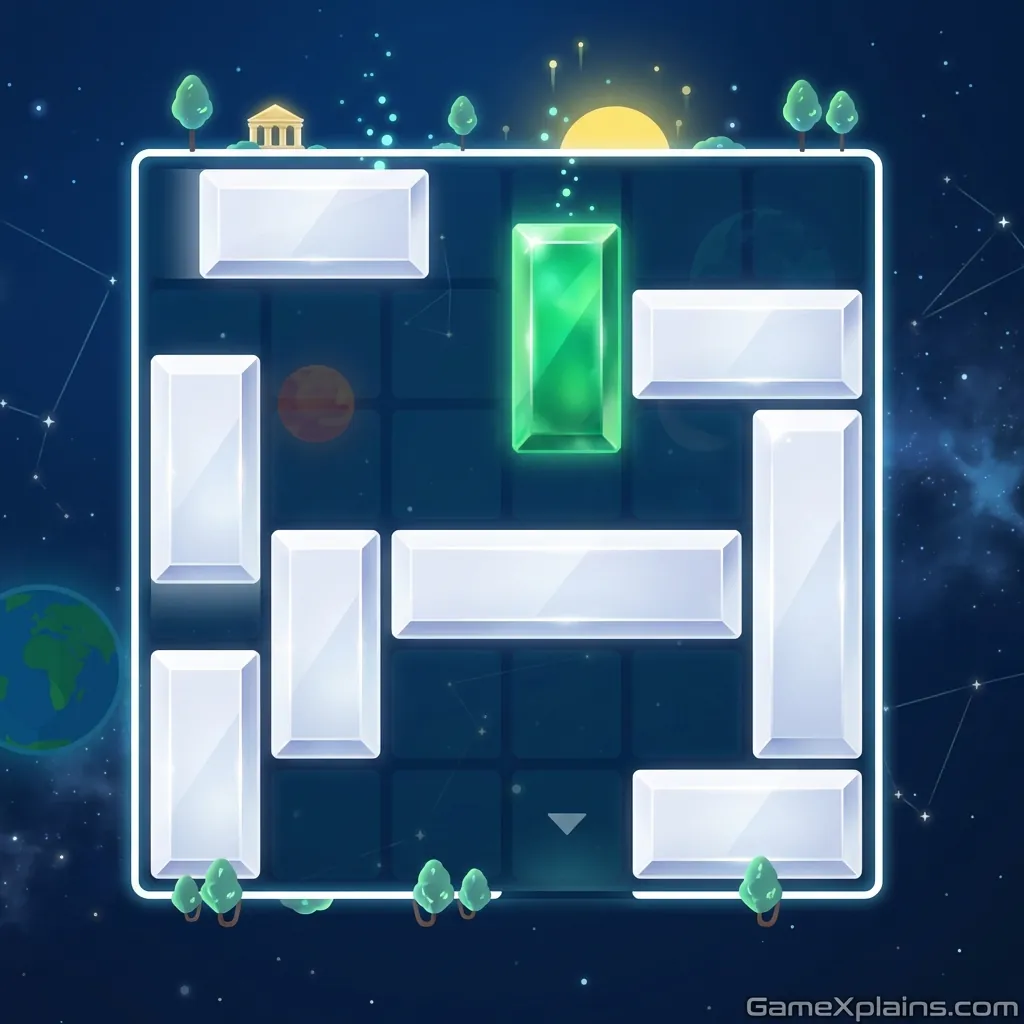
Unblock FRVR is a sliding block online/browser game built around one simple goal: move the key block to the exit by shifting other blocks out of the way. It sounds easy until you hit layouts where one careless slide creates a traffic jam that takes ten moves to undo.
Play Now: Start a round of Unblock FRVR and aim to solve in the fewest moves.
If your first few attempts feel stuck, that is normal. A good habit is to pause after each move and ask, “What did this slide unlock?” This HTML5 game typically runs directly in a modern browser, so you can jump in with no download and focus on puzzle thinking instead of setup.
2. Key Features
Classic sliding-block objective with clear exit goal and fast restart for iteration.
Puzzle layouts reward planning, not speed, making it a focused free logic game.
Move economy matters, fewer unnecessary slides usually means easier endgame.
Difficulty ramps through tighter corridors and more “locking” long blocks.
Simple controls on desktop and touch, ideal for quick online/browser game sessions.
Clean, board-first presentation that keeps attention on constraints and options.
3. What is Unblock FRVR?
Unblock FRVR is a free logic game where you solve each board by sliding rectangular blocks inside a bounded grid until the target block can reach an exit lane. The core loop is: scan the board, identify the blocks pinning your target, create space by sliding blockers, then complete the final path.
The tactical dynamic comes from interdependence. Moving one block often frees another, but it can also remove the only space you needed later. The game’s differentiation is its tight, minimal rule set: there is usually no timer pressure, but the board punishes impulsive moves through reversible-but-costly detours. If you notice you are “wiggling” the same two pieces back and forth, that is your cue to re-evaluate the plan, not push harder.
4. How to Play
Rules, win and lose conditions
Goal: Slide the main block (often highlighted) to the exit edge.
Moves: Blocks slide only along their long axis (horizontal blocks slide left and right; vertical blocks slide up and down).
Win: The target block reaches the exit lane and can slide out.
Fail state: Most boards have no hard fail, but you can effectively fail by bloating your move count or looping without progress.
Progression: Boards typically get harder by adding more blocks, fewer empty cells, and more “chain locks” where one move depends on two others.
Controls (table)
Action | Desktop (Mouse/Keyboard) | Mobile/Tablet (Touch) |
|---|---|---|
Select a block | Click the block | Tap the block |
Slide block | Drag in allowed direction | Swipe/drag in allowed direction |
Undo or reset | Usually an on-screen button (varies by version) | Usually an on-screen button (varies by version) |
Experience cue: If a block will not move, it is either at the wall or another block is flush against it, so look for the one empty cell you can create first.
5. Core Gameplay Mechanics
1) Main system
When you slide a block, the board updates with a strict constraint: pieces never rotate, and they only translate along their axis until they hit another piece or the boundary. That means every move is about manufacturing empty cells in the right row or column. In this online/browser game, efficient play is the habit of making moves that create new options, not just different positions.
2) Tactical dynamics
When you see the target’s path blocked by multiple pieces, do the work in layers: free the nearest blocker first, then the one behind it. If you can open a “pocket” of two adjacent empty cells, do it, because that pocket acts like a buffer you can reuse to reposition long blocks. Example: a single two-cell pocket can let a vertical piece step upward in stages.
3) Progression and scaling
As you advance, boards usually scale by reducing slack space and adding longer blocks that span key lanes. This creates lock chains where a piece cannot move until another piece moves twice, which cannot happen until you carve space elsewhere. In harder stages, the correct first move might look useless, because it is setting up the only future pocket that breaks the chain.
4) Key elements and constraints
Key elements are the exit lane, the target block, and “anchor” blocks that are long enough to pin multiple lines. Obstacles are simply other blocks, but the real hazard is move waste: extra slides that do not increase reachable positions. If your move count rises and the exit lane still looks identical, treat that as a soft fail and consider a reset.
6. Strategies
Pocket First Method
Build a reusable empty pocket near the center before you chase the exit. It works because a two-cell pocket lets you reposition multiple blocks without constantly rebuilding space. Warning: do not chase pockets in corners, corner space often becomes unusable once a long block slides in.
Block the Blockers
Identify the top two pieces that directly prevent the target from approaching the exit, then work backward to what prevents those pieces from moving. This works because it turns a messy board into a dependency list. Warning: if you unlock a blocker but it still has only one square of travel, you may need a larger pocket first.
One-Way Commitment Check
Before moving a long block into a tight corridor, ask if you can pull it back out later. This works because some corridors become “one-way doors” when the last empty cell is consumed. Warning: if your only empty cell ends up behind a long vertical piece, reset early instead of digging deeper.
Two-Move Rule
Try to justify each move with a near-term payoff: “This creates space for X to move next.” It works because it prevents aimless shuffling, which inflates move count and hides the real dependency. Warning: the first move in tough puzzles may break this rule, but it should still create a new pocket.
Exit Lane Discipline
Keep the target’s row or column as clean as possible, and avoid sliding new blocks into that lane unless it clearly enables an immediate unlock. It works because the final solve often requires a straight run to the exit. Warning: if you “solve” the lane early but cannot move the target, you probably ignored the block behind the lane.
Reset With Purpose
Use reset as a tool, not a defeat. If you realize your early path is wrong, restarting is faster than unwinding 15 moves. It works because early boards have many branching options, but only a few lead to clean endgames. Warning: after a reset, change exactly one early decision so you learn what mattered.
Decision Flow (Quick Win Rule) Do you have a 2-cell pocket? No -> Create central pocket -> Recheck blockers Yes -> Can nearest blocker move? No -> Free its dependency -> Recheck pocket Yes -> Does it clear target lane? No -> Improve pocket position -> Try again Yes -> Slide target toward exit -> Finish
Experience cue: If you keep returning to the same position after 6 to 8 moves, you are in a loop, reset and pick a different first unlock.
7. Similar Games
If you want more aim-and-adjust challenges that reward clean inputs, explore Skill.
If you prefer more deduction-forward board challenges, explore Puzzle.
8. FAQ
How to unblock games that are blocked?
You usually cannot reliably “unblock” games on a restricted network without permission. School or workplace filters are managed by administrators, and bypassing them can violate policies. The safest option is to use approved access, a personal network at home, or ask for an allowed educational break list.
Are unblocked sites legal?
Often, yes, but legality depends on what the site hosts and how you access it. A website itself can be legal while bypassing a network restriction is still against local rules or terms of use. If you are on a managed network, treat the policy as the deciding factor, not just the law.
What game websites are not blocked by school?
There is no universal list because blocking differs by district, country, and device settings. Some schools allow curated learning game portals or whitelisted domains, while others block most gaming content. If you need access, the practical approach is to ask what sites are approved for breaks or clubs.
What makes a game unblocked?
“Unblocked” usually just means the site’s domain and content are not filtered by a specific network or device policy. It does not describe the game’s quality or safety. A game can be accessible because it is hosted on a permitted domain, uses HTTPS cleanly, or is on a whitelist.
How do I play Unblock FRVR online?
Unblock frvr online typically means playing the browser version in a tab without installing an app. You slide blocks to clear a path for the target piece, aiming to reduce wasted moves. If the board stops changing after several moves, reset and prioritize building a central pocket.
Is Unblock FRVR free and available on mobile?
Unblock frvr free is commonly used to describe both the browser version and app versions with optional ads or purchases that can vary by platform. You can also see listings like Unblock frvr android and Unblock frvr ios. If you see “Unblock frvr 2022” referenced, that is usually a version or store listing context.
9. Technical
Unblock FRVR is commonly presented as an HTML5 game (and it may use WebGL depending on the build). For the browser version, it is an online/browser game you can launch with no download on most modern browsers like Chrome, Firefox, Safari, and Edge.
Performance is typically smooth on mid-range laptops and phones if you close heavy background tabs. Controls are simple drag or swipe. Saving, hints, and ads can vary by version, so treat those features as “may be present” rather than guaranteed.
If you are looking for installs, you may also see Unblock frvr download referenced in app stores, but the web version remains a convenient no download option for quick puzzle sessions.
10. Final Verdict
Unblock FRVR succeeds because it makes sliding-block logic feel clean and readable. As a free logic game, it rewards planning, dependency tracking, and early-pocket setup more than speed. Its main limitation is that some boards can feel similar over time, and hint or reset behavior may vary by version.
If you want a focused online/browser game that you can open with no download, it is a solid pick for short, brain-on sessions. Play Unblock FRVR when you want a pure, constraint-based puzzle, then apply the pocket-first method to keep your move count under control.
Comments (0)
No comments yet. Be the first to share your thoughts!