No Pain No Gain: Ragdoll Sandbox
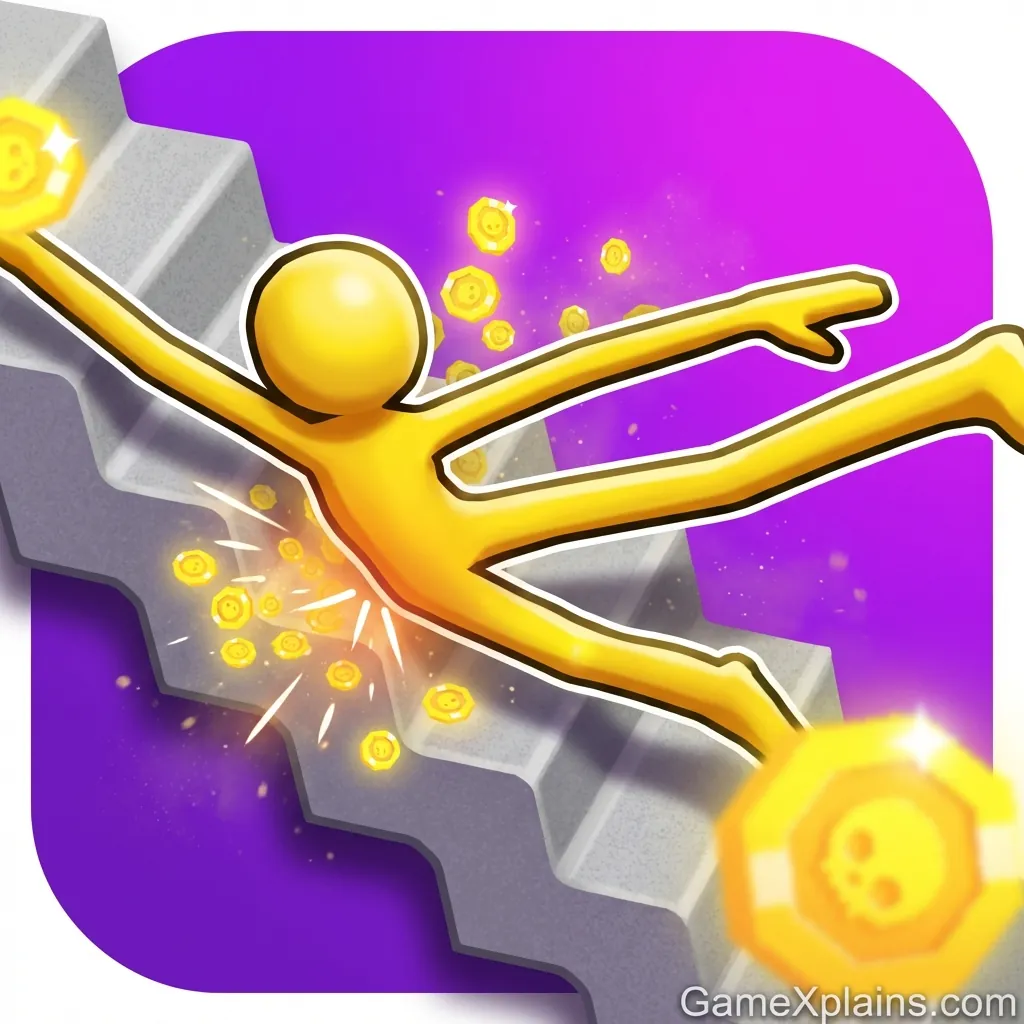
About This Game
No Pain No Gain: Ragdoll Sandbox (Play + Guide)
1. Introduction
No Pain No Gain: Ragdoll Sandbox is a stickman physics playground where your main “skill” is learning how force, angles, and timing turn chaos into repeatable results. It plays like a quick experiment loop: set up a scenario, trigger motion, watch the ragdoll react, then adjust your setup to get the outcome you wanted.
Play Now: Jump in, run a simple test (one launch, one impact), then tweak one variable at a time.
Most versions run as an HTML5 game (it may use WebGL), so you can usually play in a modern browser with no download.
2. Key Features
Physics-first ragdoll reactions where small angle changes create big outcome differences.
Sandbox setups that reward experimentation more than memorizing a single “best” route.
Quick reset loops, so you can test ideas in seconds instead of long sessions.
Simple controls with depth from timing windows, momentum, and collision behavior.
Variety of props and hazards (depending on version) to create custom challenge runs.
Light progression in most versions, often via unlocks or scenario selection.
3. What is No Pain No Gain: Ragdoll Sandbox?
No Pain No Gain: Ragdoll Sandbox is an online/browser game built around a repeating loop: choose a setup, apply force (push, drop, launch, or collide), and watch the stickman ragdoll respond to the environment. The tactical dynamic is about risk-reward: higher speed usually means bigger results, but also more randomness if you lose control of angles.
What differentiates it from many “one-track” runner or fighter games is that your objective is rarely a single finish line. Instead, you’re optimizing outcomes inside a physics toybox: cleaner landings, stronger impacts, better control, or more consistent results across repeats. If you’re searching phrases like “No Pain No Gain unblocked,” treat it as a browser-friendly sandbox title that typically loads quickly when your device and network allow it.
4. How to Play
Your goal depends on the mode you choose (or the scenario you build), but the basic win condition is consistency: making the ragdoll do what you intended. Typical fail states are soft failures rather than hard game overs: you miss the target area, lose momentum too early, or trigger an outcome that ends the run before the key interaction.
Controls (Table)
Action | Keyboard | Mouse/Touch |
|---|---|---|
Move / reposition (if available) | WASD or Arrow Keys | Drag or joystick area |
Jump / trigger | Space | Tap |
Grab / interact (if available) | E / Left Ctrl | Tap-and-hold |
Aim / adjust angle | Arrow Keys / Mouse move | Swipe / drag |
Reset / restart | R | On-screen reset button |
Pause / menu | Esc | On-screen menu button |
Progression varies by version. In most versions, you either pick different scenarios, unlock props, or replay the same sandbox with new constraints. If you’re coming from mobile searches like “No pain no gain ragdoll sandbox apk” or “No pain no gain ragdoll sandbox download,” keep in mind the browser version (when available) typically focuses on quick sessions, while app installs may handle saving and unlocks differently.
Practical cue: If your ragdoll keeps “folding” mid-air, reduce your launch angle and use shorter inputs rather than holding the trigger.
5. Core Gameplay Mechanics
1) Main system (physics and collision)
When you apply force (a push, drop, swing, or launch), the game translates that into momentum on a jointed ragdoll. Collisions then redistribute that energy through joints, which is why a clean hit to a solid surface can flip the whole body. When you aim for repeatable results, prioritize stable contact points over chaotic multi-bounce impacts.
2) Tactical dynamics (reading the setup)
When you see tight spaces, do smaller adjustments and keep speed under control, because cramped geometry amplifies random rotations. When there’s open space, do higher-speed tests to learn the “range” of your ragdoll before you add hazards. If a prop has an edge, approach it slightly off-center to avoid symmetrical flips.
3) Progression and scaling
When you move to later scenarios (or add more hazards), the difficulty usually scales by reducing forgiveness: narrower land zones, more obstacles, or shorter timing windows before you lose momentum. The best way to adapt is to lock one variable first (angle, speed, or entry point), then only change one thing per attempt so you can spot what truly improved.
4) Key elements (hazards, resources, and fail states)
When hazards are active (spikes, crushers, falls, or moving objects, depending on version), your “resource” is control: once rotation becomes uncontrolled, you’re mostly along for the ride. Fail states are often “no meaningful interaction happened” or “the run ended early.” Reset fast, then rebuild the setup to reduce randomness.
Decision Flow (Quick Win Rule)
Is your result inconsistent? Yes -> Lower speed -> Fix entry angle -> Repeat 3 tests No -> Is the interaction too weak? Yes -> Increase speed slightly -> Change contact point No -> Add one hazard -> Test -> Keep only what stays consistent
6. Strategies
1) One-Variable Testing
Change only one thing per attempt: angle, speed, or starting position. This makes cause-and-effect obvious and prevents “lucky” runs from fooling you. It works because ragdoll physics has hidden complexity. Warning: if the map has moving parts, wait for the same timing before testing.
2) Center-Mass Control
Aim to strike with the torso first when you need stable outcomes, and avoid leading with hands or feet unless you want spins. It works because center-of-mass contact reduces rotational torque. Warning: in tight corridors, torso hits can wedge you, so approach slightly angled.
3) Two-Step Launching
Do a low-power launch to establish direction, then a second input to add speed once you’re aligned. It works because the first step reduces random rotation before you commit. Warning: if the second input happens too late, you’ll waste it correcting mid-air.
4) Wall-Brush Steering
When approaching a wall, brush it lightly to shave off sideways drift instead of slamming into it. It works because friction and minor collisions can stabilize your path. Warning: too much contact turns into a pivot and you’ll spin out.
5) Soft Reset Discipline
If the first second goes wrong, reset immediately instead of “hoping it recovers.” It works because early chaos compounds into unpredictable results. Warning: don’t reset so fast that you never learn what caused the failure, note the last input timing.
6) Hazard Staging
Add hazards one at a time: first learn the base path, then introduce a single spike or moving prop, then increase difficulty. It works because each hazard changes collision outcomes. Warning: stacking hazards too early makes every attempt look random and unfixable.
Practical cue: If you keep bouncing off the same edge, shift your entry point by a small character-width and retest.
7. Similar Games
Stickman Bullet Warriors – Gunplay plus physics knockback, faster rounds, more direct control.
Stickman Zombie vs Stickman Hero – Combat-forward stickman chaos with waves and simple objectives.
Ragdoll Playground – Pure sandbox experimentation with props, collisions, and quick resets.
If you want more fast reaction and physics-heavy games, explore Action.
If you prefer brawler-style stickman challenges, explore Fighting.
8. FAQ
What is the most realistic ragdoll game?
The most realistic ragdoll game depends on what you mean by “realistic.” If you want weighty motion and believable impacts, look for sandboxes that emphasize joint limits and consistent collision rules. No Pain No Gain: Ragdoll Sandbox is usually more “playable physics” than strict simulation, which helps learning.
What is the "No Pain No Gain" game about?
No Pain No Gain: Ragdoll Sandbox is about setting up physics interactions and watching a stickman ragdoll respond to force, collisions, and hazards. The fun is in experimenting and then improving consistency. Some players also search “No Pain No Gain movie,” but the game is a separate concept from any film with a similar phrase.
How much is a realistic ragdoll sandbox?
Some ragdoll sandboxes are free in-browser, while others are paid apps or premium PC titles. In this page’s context, “No pain no gain ragdoll sandbox free” and “No pain no gain ragdoll sandbox free download” are common searches for versions that don’t require an upfront purchase. Pricing and monetization can vary by platform.
Is "No Pain No Gain" a multiplayer game?
Most ragdoll sandbox versions are single-player, focused on testing setups rather than competing live. If a version includes multiplayer, it’s typically asynchronous (sharing builds) or small lobbies rather than a large competitive ladder. In most versions of No Pain No Gain: Ragdoll Sandbox, expect solo play unless a mode is clearly labeled.
Is there a safe way to search for a browser version?
Yes. Use the exact game name, check the page title, and avoid installers you don’t recognize. If you see prompts for suspicious extensions or unclear “boosters,” back out. A normal online/browser game should load with standard browser permissions and simple input prompts.
Can I improve consistency even if physics feels random?
Yes. Focus on repeatable entry angles, stable contact points, and one-variable testing. Physics feels random when too many collisions happen at once. Reduce speed slightly, widen your approach, and retest three times. If the result stays similar across attempts, you’ve found a controllable setup.
9. Technical
No Pain No Gain: Ragdoll Sandbox is commonly presented as an HTML5 game (it may use WebGL) that runs in modern browsers like Chrome, Firefox, Safari, and Edge. Most mid-range devices should run it smoothly, but physics-heavy scenes can slow down on older laptops or low-memory phones.
Controls are typically keyboard and mouse on desktop, with touch buttons or gestures on mobile. If you’re using an app path (for example, “No pain no gain ragdoll sandbox apk” or “No pain no gain ragdoll sandbox download”), that’s separate from playing in a browser. In many browser builds, the goal is quick access with no download, but availability can vary by site and platform.
Practical cue: If performance stutters, reduce background tabs, lower zoom, and restart the level to clear physics clutter.
10. Final Verdict
No Pain No Gain: Ragdoll Sandbox works best for players who like experimentation, funny physics outcomes, and incremental improvement without a strict win screen. Its strengths are quick resets, simple controls, and a learning curve that rewards patience. Its limits are that outcomes can vary by version and some scenarios may feel chaotic until you adopt one-variable testing.
If you want a stickman sandbox that feels like a science lab for momentum and collisions, No Pain No Gain game free is worth a session or two to learn the loop. Start small, lock your angles, then add hazards once your baseline is consistent.
Comments (0)
No comments yet. Be the first to share your thoughts!