Papa’s Pizzeria
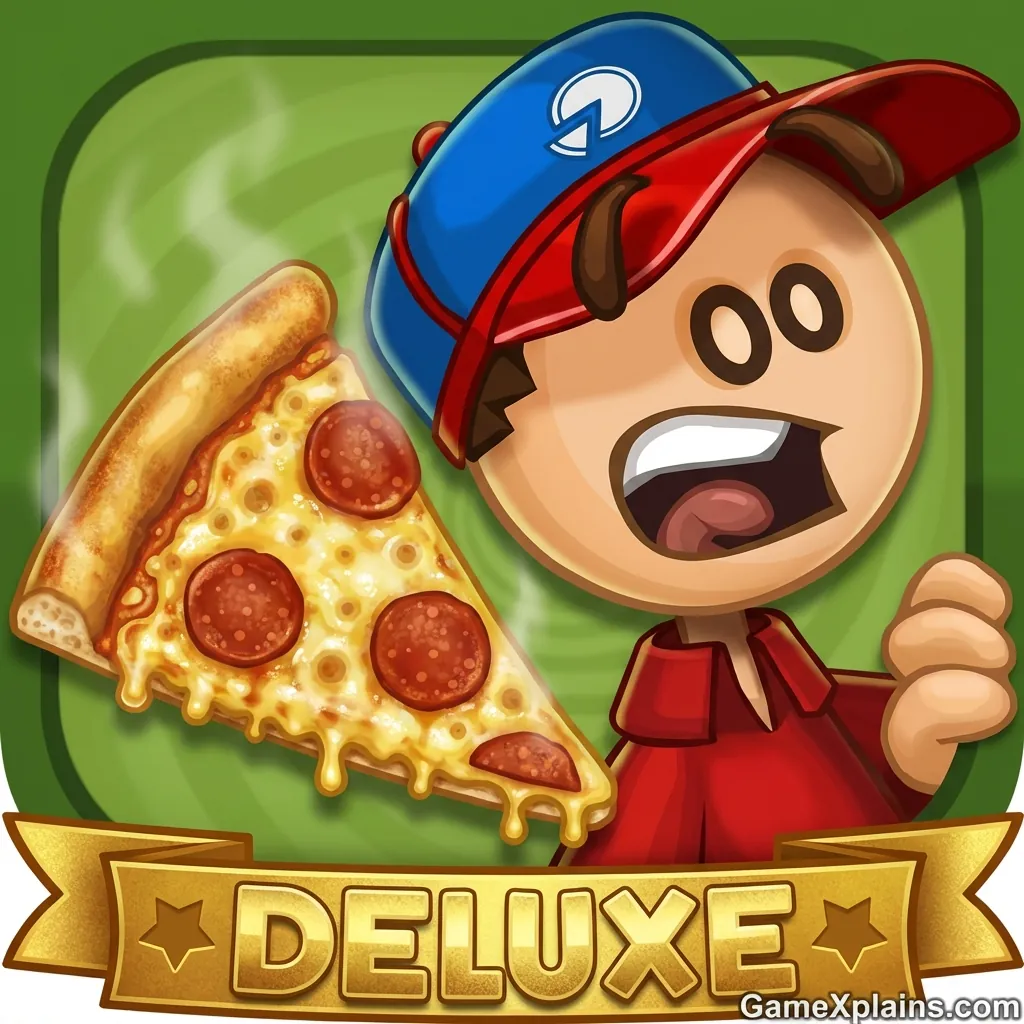
About This Game
Papa's Pizzeria Play Online + Guide
1. Introduction
Papa's Pizzeria is a fast, step-by-step time-management cooking game built around four kitchen stations: order, build, bake, and slice under light pressure. It’s easy to start, but getting consistent “clean” results takes timing and precision across each station.
Play Now: Jump into the Papa's Pizzeria online/browser game and follow the first ticket’s prompts to learn the rhythm.
Most web versions you’ll find are an HTML5 game (sometimes using WebGL), so they typically run in your browser with no download.
2. Key Features
Order-build-bake-slice cooking loop that test timing, accuracy, and order of operations.
Clear step prompts that teach the loop fast, even for first-time players.
Quick restarts, letting you retry a step without long loading or setup.
Score feedback per step, rewarding clean toppings, correct bake levels, and accurate slice patterns.
Difficulty ramps through tighter customer queues and more demanding tickets.
Works well as a short-session online/browser game with simple mouse or touch input.
3. What is Papa's Pizzeria?
Papa's Pizzeria is a time-management cooking game where each customer order is broken into four station tasks, and each action is judged on accuracy and timing. The core loop is: take an order, build the pizza, bake it, slice it, then serve, then get a final performance result.
The tactical dynamic comes from “doing the right thing at the right speed.” Rush a slice and you’ll cut wobbly lines; pull a pizza too early and it stays undercooked. What differentiates Papa's Pizzeria from many kitchen sims is the four-station tip system and immediate per-customer feedback, where every micro-action can nudge your final rating.
4. How to Play
Papa's Pizzeria runs on a four-station loop that you repeat for every customer who walks through the door. You read the order ticket, build the pizza with the requested toppings on the right halves or quadrants, bake it for the exact number of slots on the bake meter, then slice it the requested number of times before serving. The day ends at closing time, and your tips reflect how clean each station was for each customer.
Basic rules, win/lose, and progression
Win condition: Hit a high score on each customer by matching the ticket exactly: right toppings, right placement, perfect bake, right slice count, fast service.
Fail states: There is no hard "game over" — even a poor day continues — but every wrong topping, burnt pizza, miscut slice, and slow ticket eats your tips. Bad days slow your unlock rate for new toppings, customers, and holidays.
Progression: You unlock new toppings, new closer customers, new holidays, and decoration items as you climb ranks. Each holiday adds seasonal toppings and new ticket patterns to keep the loop fresh.
Controls (table)
Action | Mouse / Trackpad | Touch |
|---|---|---|
Read order ticket | Click ticket on the order station | Tap ticket |
Add topping | Click and drag from topping rack to dough | Tap topping then tap target half/quadrant |
Place pizza in oven | Drag pizza from build station to oven slot | Tap pizza, tap oven slot |
Pull pizza out | Click pizza in oven when bake meter hits target | Tap pizza in oven |
Slice pizza | Drag straight cuts in the requested pattern | Swipe straight cuts |
Serve customer | Drag finished pizza to customer | Tap finished pizza, tap customer |
Experience cue: If a slice keeps wobbling, draw it in one straight motion across the whole pizza instead of short strokes. Clean cuts score higher than fast cuts.
5. Core Gameplay Mechanics
1) Main system
Every customer is graded on four criteria: order accuracy (right toppings on right halves), bake precision (pizza pulled in the target zone of the bake meter), slice accuracy (clean cuts in the requested count), and waiting time. Each criterion contributes to the tip — hit all four well and you get a blue ribbon plus the maximum tip.
2) Tactical dynamics
When you see the bake meter reach the target zone, pull the pizza immediately — overshooting drops the bake score fast. When two pizzas bake at once, plan the pull order in your head before the second one even goes in. Experience cue: If a customer's patience bar turns red, serve them next even if their pizza is not perfect — patience tips weigh more than micro-perfect slices.
3) Progression and scaling
Early days have 3-4 customers and forgiving ticket patterns. Mid-game customers stack up faster, ask for split toppings (half and half), and demand specific slice counts (4, 6, 8 slices). Late game adds closer customers, holiday toppings, and tighter patience meters. The loop scales by adding pressure across all four stations rather than changing the loop itself.
4) Key elements
Key elements are the order ticket, the topping rack, the bake meter, and the slicer. Hazards are wrong topping placement, burnt pizzas, wobbly slice cuts, and patience bars going red. Some holiday days add bonus tickets that score extra tips for perfect work.
Decision flow (clean ticket rule): Read the full ticket → build the pizza with toppings in correct positions → bake until the meter hits the target zone → slice in the requested count and pattern → serve before patience drops. Repeat for every customer in the queue.
6. Strategies
Two-Beat Timing Tap or drag in a steady two-beat rhythm instead of spamming fast inputs. This keeps your marker inside the acceptable window and prevents overshoot on fill meters. Warning: if a step accelerates over time, shorten the second beat slightly.
Edge-to-Center Cuts Start your slice at the edge of the guide and finish toward the center to reduce wobble. It works because most versions grade path control more than raw speed. Warning: don’t “correct” mid-slice too aggressively, it often creates jagged lines.
Meter Feathering When a progress bar is near the goal, switch to micro-inputs (short drags or quick taps). Feathering works because the last 10% is where overshoot penalties happen most. Warning: some steps require continuous motion, so pausing too long can reset progress.
Heat Window Discipline Treat cooking steps like a timing window, not a race. Wait for the indicator to align, then commit to a single clean press or release. This works because repeated tapping can push you past “done” into “burnt.” Warning: if the indicator drifts, adjust with smaller corrections.
Step Reset Awareness If your result is already poor early, it can be smarter to restart the ticket rather than dragging mistakes forward. This works in an online/browser game where retries are fast and scoring is cumulative. Warning: don’t reset for one small miss, save it for major burns or repeated slipups.
Prompt-Led Planning Read the next prompt before finishing the current action so you’re ready to switch tools instantly. It works because late tickets chain tasks with minimal downtime. Warning: avoid pre-emptive clicks, extra inputs sometimes count as errors.
7. Similar Games
If you like Papa's Pizzeria, you may also enjoy more Cooking games.
8. FAQ
Is Papa's Pizzeria still playable in 2026?
Yes. The original Flash version was retired with Flash itself, but HTML5 ports are widely available and run in any modern browser without a plugin. Mobile apps for the official sequels (Papa's Pizzeria HD, Papa's Pizzeria To Go!) are also still on the App Store and Google Play.
Do I need to download anything to play?
No. The browser version of Papa's Pizzeria runs fully in Chrome, Firefox, Edge, or Safari. No installation, no account, no plugins required.
Which is the hardest Papa's game?
Most veteran players agree Papa's Bakeria and Papa's Sushiria are the most demanding because of their multi-step decoration phases. Papa's Pizzeria sits at the easier end of the series — a great entry point for new players.
Does Papa's Pizzeria have an ending?
The game has no hard ending. You keep playing days, unlocking holidays, customers, toppings, and decor. The "end" most players reach is unlocking every closer customer and every holiday.
How many slices can I cut a pizza into?
Customers ask for 4, 6, or 8 slices most commonly. The slicer awards full points only when the slice count matches the ticket and the cuts are clean and straight.
Can I save my progress?
Most browser ports save progress in local storage. If you clear your browser cache, you lose the save — back up by signing in or using an account-based version when available.
Is Papa's Pizzeria really free?
Yes, the browser version is free with no in-app purchases. The official mobile apps (HD and To Go!) are paid one-time purchases with no microtransactions.
9. Technical
If you’re playing a web version, it’s typically an HTML5 game that runs as an online/browser game in modern browsers like Chrome, Firefox, Safari, or Edge. Performance is usually fine on most mid-range laptops and phones, but older devices may stutter during animated steps.
Platform: Browser (HTML5, may use WebGL)
Controls: Mouse/trackpad or touch; keyboard support varies
Minimum: A modern browser, stable connection, and enough RAM to keep tabs responsive
No download: A true browser build should launch and play with no download required
Experience cue: If taps don’t register, zoom the page to 100% and disable trackpad “tap to click” misfires.
10. Final Verdict
Papa's Pizzeria’s ticket time-managements are satisfying when you treat them like precision drills: smooth inputs, clean timing, and consistent pacing. As an online/browser game, the best versions are simple to start, quick to retry, and easy to learn. Limits usually come from version differences, since controls, saving, and grading can vary.
If you want a quick, skill-focused free cooking game that plays like an HTML5 game and asks for no download, Papa's Pizzeria (or a Papa's Pizzeria-style browser build) is a strong pick. For more portal-style kitchen management, you can also look up My Pizzeria game or related Papa’s entries like Papa's pizzeria miniplay ios and Papa's Freezeria miniplay.
More categories to explore: If you want more long-form management and systems, try Simulation.
If you want faster, score-chasing sessions, try Arcade.
Comments (0)
No comments yet. Be the first to share your thoughts!