Game Cafe Escape
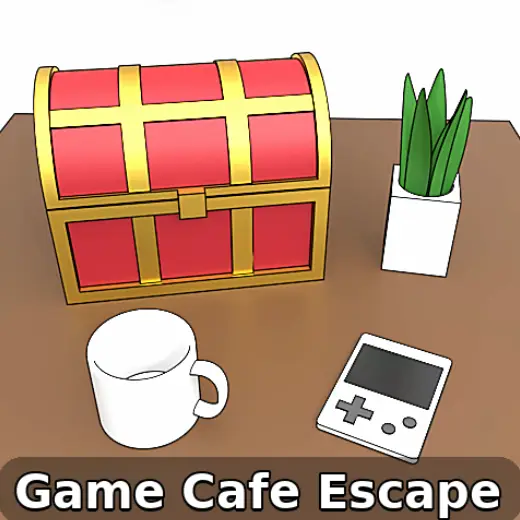
About This Game
Game Cafe Escape Play + Guide
1. Introduction
Game Cafe Escape is a tight escape room puzzle set inside a cozy gaming cafe. It plays like a free escape room game, but the theme keeps the clues grounded and readable. Your job is to notice small details, collect items, combine them, and unlock the final exit through a chain of clues and codes. If you like short, logical clears, this guide helps you move faster without guessing.
Play Now: Open Game Cafe Escape as an online/browser game and start your first full-room scan before picking up anything.
Tech note: it’s typically an HTML5 game (may use WebGL), so it usually plays in your browser with no download. If you are comparing it to other HTML5 game releases, expect similar click-and-zoom pacing.
2. Key Features
Compact escape room layout that rewards re-checking the same scene after each unlock.
Inventory tools and item combining, turning small finds into usable solutions.
Clear code-and-lock progression, where each clue points to a specific input panel.
Cafe theme clues like menus, signage, and game props that imply order.
Short-session pacing, usually solvable in one focused sitting without brute force.
Simple UI: click, zoom, inspect, and test, with minimal distractions.
3. What is Game Cafe Escape?
Game Cafe Escape is an escape room style online/browser game where the cafe itself is the puzzle box. As a Game cafe game, it mixes cozy decor with classic lock inputs. Your role is a clue-collector and systems thinker: you identify what can be interacted with, gather items, interpret patterns, then apply them to locks.
The core loop is consistent: scan for hotspots, pick up items, inspect for hidden markings, then use those details to open a new compartment. The tactical dynamic is information management. You are rarely stuck because of difficulty, you are stuck because you missed a connection, an ordering rule, or a second inspection state.
What differentiates this from a generic room escape is the cafe theme. In most versions, the puzzle chain leans toward sign-like cues (a menu layout or label order), device-like inputs (a keypad or panel), and game-like props (tokens, cards, or icon sets) rather than only a single key.
Micro cue: if a clue looks “too obvious,” check whether it actually provides the order, not just the digits.
4. How to Play
Goal: Escape the cafe by solving a linked sequence of puzzles that ends in a final door or exit interaction.
Win condition: You trigger the exit sequence after completing the last lock and using the final item correctly.
Fail states: Most escape room browser games do not have a timer that kills you, but the practical fail state is stalling. Common stalls come from missing a hotspot, entering a correct code on the wrong lock, or forgetting to re-inspect an item after you opened something new.
Progression: The game usually follows a clean dependency chain: open an early container, get a tool or clue, use that to open a second container, then assemble the final code from multiple parts. Saving varies by version, so finishing in one session is often the safest approach for an online/browser game.
Controls (Table):
Action | Mouse/Keyboard (Browser) | Touch (Mobile Browser) |
|---|---|---|
Look around | Move cursor, click hotspots | Tap hotspots |
Pick up item | Click item | Tap item |
Open inventory | Click inventory slot | Tap inventory slot |
Inspect item | Click item again or inspect icon | Tap item again |
Combine items | Select item, then select second item | Tap item, then tap second item |
Enter a code | Click keypad/input, type numbers | Tap keypad/input, use on-screen keys |
Micro cue: if a close-up panel feels “dead,” tap corners and edges. Many escape rooms hide tiny clickable zones there.
5. Core Gameplay Mechanics
1) Main system (When X, do Y): When you click a hotspot, the game reveals an item pickup, a zoomed inspection view, or a locked interaction. Items go into inventory and can be inspected or used on other hotspots. The room does not fully “reset,” so your best progress comes from noticing what has become newly usable after each unlock.
2) Tactical dynamics (When you see Z, do A): When you see any repeated symbol set (numbers on a sign, shapes on a menu, icons on a device), treat it as an input format for a lock. When a lock rejects an entry, do not brute force. Instead, verify order rules: left-to-right, top-to-bottom, or grouped-by-theme, then match that to the lock’s slots.
3) Progression and scaling: When you open early drawers or cabinets, the game typically introduces a second layer: items that must be combined, rotated, or inspected for hidden marks. Difficulty ramps by making clues less direct, for example a number set that needs a correct ordering reference. Later steps often require backtracking across the same cafe scene with new context.
4) Key elements and fail risks: When you manage inventory, you manage information. Items are not just keys, they are clue carriers that may reveal details only in zoom view or after another unlock. Hazards are cognitive: missing a faint marking, forgetting an item has multiple states, or typing a code into the wrong panel. Example: if a keypad expects four digits and you only have three, the “missing digit” is usually hidden in a second clue near the keypad.
6. Strategies
Hotspot Sweep Rhythm Do a slow left-to-right sweep, then a fast re-sweep after every unlock. Why it works: escape room chains often make previously decorative objects become clue sources. Warning: if you click randomly, you’ll lose a mental map of what you already checked and repeat work.
Inventory Double-Inspect Inspect each new item twice: once on pickup, once after the next unlock. Why it works: many versions hide a tiny mark on the reverse side or only show text in the zoom view. Warning: if an item seems useless, keep it in mind until you test it on at least two hotspots.
Code Format Gate Before entering any Game cafe escape code, confirm the expected length and input style (digits, shapes, icon order). Why it works: it prevents “almost correct” entries that waste time. Warning: if you are forcing a five-part idea into a four-slot lock, you are solving the wrong step.
Theme Mapping Trick Treat the room like a themed set: cafe items suggest menu ordering, game props suggest icon sequences, drawers suggest physical tools. Why it works: designers usually build a readable logic chain around theme objects. Warning: do not assume every decoration is a clue, focus on repeated motifs and clear interactables.
Order From Positioning When you find multiple numbers or symbols, derive the order from placement (top-to-bottom, left-to-right) or a clear reference layout like a menu grid. Why it works: visual order is the most common ordering rule in browser escape rooms. Warning: if two plausible orders exist, look for a start marker like a highlighted icon.
Last-Lock Inventory Audit When you reach the final lock, pause and list what remains: unused items, unopened panels, and any code pads you never touched. Why it works: the end usually needs one missing linkage, not a new mechanic. Warning: brute forcing at the end wastes time and trains bad habits.
Decision Flow (Quick Win Rule) Did you unlock something new? Yes -> Re-sweep room -> Inspect new items -> Test on 2 hotspots No -> Do you have a clear clue set? Yes -> Match clue format to a lock -> Enter carefully No -> Re-check zoom views -> Look for order markers -> Try again
7. Similar Games
If you want more room-logic games like this free escape room game, explore Puzzle. If you prefer a slower, clue-first free escape room game experience, this category usually fits well.
If you prefer pattern-first reasoning and fewer hidden-click checks, explore Logic.
8. FAQ
How long does Game Cafe Escape usually take to finish? Most players clear Game Cafe Escape in a short session, often under an hour, if they stay organized. The main time sink is missing one hotspot or mis-ordering a code. If you stall, switch to a checklist: locks left, clues found, and inventory items unused.
Where do I start if I need a Game cafe escape walkthrough? Start by identifying every locked object and every visible clue cluster, then map each clue to a matching lock format. A good Game cafe escape walkthrough mindset is “derive, don’t guess.” If a panel expects four inputs, hunt for a four-part clue and confirm the order rule.
What should I do when I can’t find the right Game Cafe Escape answers? The direct fix is to re-inspect inventory and zoom views, not to click faster. Game Cafe Escape answers are usually fully visible but easy to overlook, like a tiny mark or a clue on the back side of an item. Micro cue: if you have a code but it fails, check ordering first.
Is it a cafe-themed puzzle like a Cafe Escape room experience? Yes, it’s typically structured like a Cafe Escape room in a single scene, with multiple close-up panels. The cafe theme tends to show clues through menus, signage, and game props rather than only keys. That makes careful scanning and repeated motif spotting more important than speed.
How is it similar to a Machine Room Escape Walkthrough style chain? It’s similar in structure: one unlock yields a tool, which reveals the next clue, which produces the next lock input. A Machine Room Escape Walkthrough often emphasizes mechanical parts, while Game Cafe Escape leans into cafe and game-themed props. The solving approach stays the same: match clue format to lock.
Is it comparable to a Computer Office Escape or a Crazy games escape room? In feel, yes. A Computer Office Escape often uses screens, icon sequences, and keypad inputs, which are common in cafe-themed puzzles too. And if you’ve played a Crazy games escape room, you’ll recognize the same point-and-click rhythm. The main skill is disciplined re-checking after each unlock.
9. Technical
Game Cafe Escape is typically an HTML5 game that runs in a browser (and may use WebGL). As an HTML5 game, it relies on your device’s browser performance more than raw graphics settings. You can usually play this online/browser game on Chrome, Firefox, Safari, or Edge. Most mid-range laptops and phones should run it smoothly if you keep only a few tabs open.
Controls are point-and-click on desktop and tap-based on mobile. Because it runs in the browser, it is commonly a no download experience. That makes it easy to treat as a quick free escape room game between tasks. If performance dips, close background apps, disable heavy extensions, and refresh once to clear a stalled state.
Micro cues you can test:
If clicks stop registering, refresh once, then restart your sweep from one corner.
If a zoom view looks empty, tap the corners and edges for subtle hotspots.
10. Final Verdict
Game Cafe Escape is a focused free escape room game built around observation, inventory logic, and code entry. If you want a free escape room game that respects logic more than speed, it’s a good fit. Its biggest strength is readability. Each unlock usually points to the next task, so progress feels logical. The main limitation is replay value. Once you know the chain, the surprise is gone, as with most short escape puzzles.
It’s a strong pick if you want an online/browser game you can finish in one sitting, like cafe-themed clue chains, and prefer a no download play style. If you want a longer adventure with multiple areas, you might prefer a bigger escape series instead.
Play Game Cafe Escape, keep a simple checklist, and treat every code as a format-matching problem, not a guessing contest.
Comments (0)
No comments yet. Be the first to share your thoughts!