Physics Drop
About This Game
Physics Drop Play Online and Guide
1. Introduction
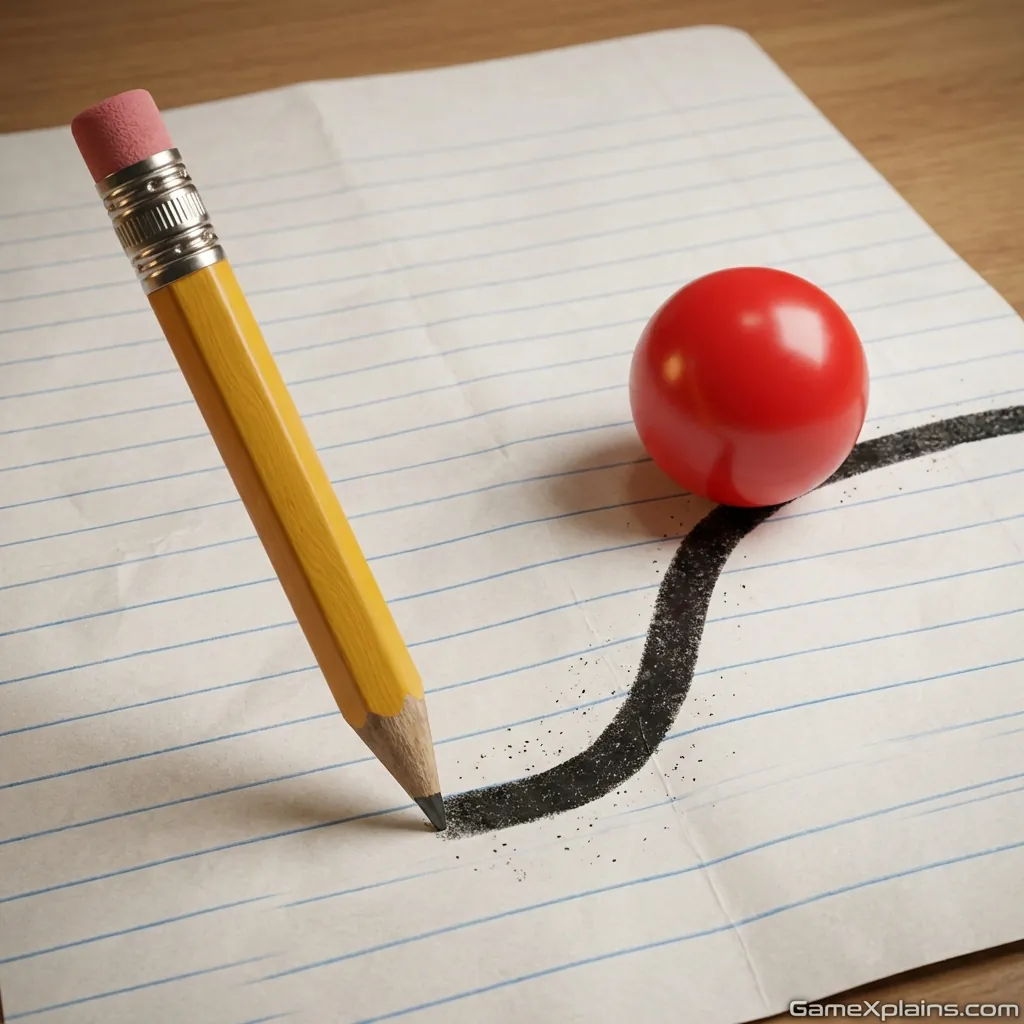
Physics Drop looks simple, but it rewards clean setups and patient timing. Your job is usually to guide a falling ball into a goal by drawing shapes that become solid platforms. The challenge is that every line you draw changes weight, bounce, and momentum, so one “good idea” can accidentally block the target.
Play Physics Drop online free now and use the guide below to fix the mistakes that keep the ball from landing where you want.
This is an HTML5 game (it may use WebGL in some versions) that typically runs directly in a modern browser with no download.
2. Key Features
Draw lines that turn into real physics objects with weight, bounce, and friction.
Short levels teach one interaction, later stages combine multiple hazards at once.
“One good stroke” solutions exist, but safe multi-step setups usually win.
Instant reset encourages fast testing, iteration, and learning from failures.
Simple controls on mouse or touch, with precision improving your success rate.
Puzzle pacing stays quick, with most attempts decided in seconds.
3. What is Physics Drop?
Physics Drop is a physics puzzle online/browser game built around a tight loop: you draw a shape, gravity takes over, and you watch whether the ball reaches the goal. The tactical dynamic is choosing between speed and stability. A fast ramp can score quickly, but a slower “catch and guide” setup prevents random bounces.
What makes Physics Drop stand out is how strongly small angle changes affect outcomes. A tiny tilt can turn a clean roll into a bounce that misses the cup. In most versions, levels are short and reset instantly, so improvement comes from learning repeatable geometry rather than memorizing long sequences.
4. How to Play
In most versions, you complete a level when the ball drops into the target zone (often a cup, bucket, or goal area). You fail when the ball falls out of bounds, gets stuck away from the goal, or your drawn shapes block the target. Some stages also punish heavy drawings that collapse or push the ball the wrong direction.
Controls (Table)
Action | Keyboard/Mouse | Touch |
|---|---|---|
Draw a line / shape | Click and drag | Tap and drag |
Stop drawing | Release mouse button | Lift finger |
Restart level | Usually R or on-screen reset | On-screen reset |
Pause / menu | Usually Esc or menu button | Menu button |
Progression typically ramps by introducing tighter targets, angled walls, moving parts, or “must avoid” zones. If you are searching for Physics drop download, note that browser versions usually focus on quick sessions, while mobile editions may add menus, skins, or ads depending on the release.
5. Core Gameplay Mechanics
1) Main system
When you draw a line, the game converts that stroke into a solid object and then simulates gravity and collisions. When the ball touches your drawing, it either rolls, slides, or bounces based on the angle and contact point. Small strokes often behave more predictably than large ones because they add less unintended leverage.
2) Tactical dynamics
When the ball spawns above a gap, build a “catch first” platform, then guide second. When you see steep slopes or narrow funnels, use short angled nudges instead of one long ramp that can rebound the ball. If the ball starts to wobble side to side, flatten your next surface to dampen momentum.
3) Progression and scaling
Early levels usually accept many solutions, but later stages tighten tolerance: the goal is smaller, the approach path is cluttered, or the ball must land at a specific speed. As difficulty scales, one-line solutions become riskier and multi-step supports become stronger. Your consistency improves when you reuse a few reliable shapes.
4) Key elements and fail states
Key elements are your drawn shapes, the ball, static walls, and the goal area. Common fail states are overshooting the cup, getting trapped on a ledge, or blocking the goal with your own drawing. If your shape falls into the target and “caps” it, restart immediately and redraw higher.
6. Strategies
Pocket Then Pour
Draw a shallow pocket under the ball to absorb the first bounce, then add a second line to “pour” the ball toward the goal. This works because you reduce random rebound energy before directing motion. Warning: if the pocket is too deep, the ball may never climb out.
Two-Tap Nudges
Use two short angled strokes instead of one long ramp: one to start the roll, one to correct the final approach. This works because micro angles are easier to adjust and less likely to clip walls. Warning: keep space between strokes, or the ball can bounce at the seam.
Goal Guard Rail
Place a tiny vertical stopper near (but not on) the goal to prevent late-stage overshoots. This works because many misses happen in the final inch when the ball carries extra speed. Warning: don’t touch the goal lip, or you can block entry entirely.
Anti-Bounce Flattening
If the ball is hopping, draw a flatter surface in its path, even if it looks slower. This works because flat contacts remove vertical energy and convert motion into controllable rolling. Warning: if the surface is perfectly flat with no exit angle, the ball can stall.
High-Line Safety Net
When levels have open space, draw your main guiding line higher than you think you need. This works because high lines give the ball more time to settle before the final drop. Warning: too high can create a long slide that builds speed and causes a launch.
Minimal Ink Discipline
Commit to fewer, shorter strokes and reset quickly when a line clearly fails. This works because extra shapes create extra collision points and unpredictable rebounds. Warning: don’t over-reset, sometimes a “bad” run becomes good with a single correction stroke.
Decision Flow (Quick Solve Rule) Ball missed the goal? Yes -> Did it overshoot? Yes -> Add a small guard rail near goal No -> Did it stall? Yes -> Add a slight exit angle on last platform No -> Flatten a surface to remove bounce, then retry
7. Similar Games
Happy Wheels – Physics obstacles with careful momentum management.
If you like Physics Drop, you may also enjoy more Multiplayer games.
8. FAQ
How to play the ball drop game?
You usually draw lines or shapes to guide a ball into a target area. Most versions let you click and drag (or swipe) to create solid platforms, then gravity and collisions do the rest. If the ball falls off-screen, gets stuck, or misses the goal, you reset and try a cleaner setup.
What is the game where shapes drop?
Many physics puzzle games convert drawn shapes into falling objects, then ask you to use gravity to solve a level. In Physics Drop style games, your drawing becomes the “shape” that drops or supports the ball. The key is drawing stable angles that do not collapse into the goal or block it.
What is the game where you catch falling objects?
Catch games focus on positioning a basket, platform, or character under items as they fall. Physics Drop is a little different because you “catch” the ball using drawn geometry rather than moving a catcher. If you want consistent catches, draw a shallow pocket first, then redirect toward the target.
What is the game where the ball drops down?
A common format is a gravity puzzle where a ball spawns above obstacles and you guide it into a cup or goal zone. Physics Drop fits that pattern: the ball drops, your lines create surfaces, and your job is to manage bounce and angle. Most failures come from too-steep ramps or last-second overshoots.
Is Physics Drop deluxe different from the browser version?
Physics Drop deluxe often refers to editions that add extra levels, a different UI, or optional features like hints. The core loop is usually the same: draw, let physics run, and reach the goal. If menus or progression feel different, treat them as version-specific additions rather than new mechanics.
Does Drop physics minecraft mean a Minecraft mod?
Not always. “Drop physics minecraft” is commonly used as a search phrase when people want Minecraft-style falling and collisions, but Physics Drop itself is typically a separate physics puzzle online/browser game. If you are looking for Minecraft content specifically, check whether the page you found is a mod or just a similar physics concept.
9. Technical
Physics Drop is typically an HTML5 game that runs as an online/browser game in Chrome, Firefox, Safari, or Edge. Most mid-range laptops and phones should run it smoothly, but frame drops can happen if the page is overloaded or the version uses heavier effects.
Recommended basics: close extra tabs, keep zoom at 100%, and use a steady pointer or finger. Controls are usually mouse or touch, and the gameplay is designed for quick attempts. If you are playing in a browser, it is generally no download, while app versions can be installed separately.
Related categories you may like:
If you want more fast, reactive challenges, explore Action.
If you prefer exploration and trial-and-error progression, explore Adventure.
10. Final Verdict
Physics Drop is a clean physics puzzle online/browser game for players who like fast experimentation and learning from small adjustments. Its strengths are instant resets, readable cause-and-effect, and solutions that feel earned when your geometry finally behaves. Its limits are that some levels can feel trial-and-error, and outcomes can vary if the ball hits a seam or edge.
If you want a Physics drop free session that you can start quickly, this HTML5 game is a strong pick, especially if you enjoy repeatable “draw, test, refine” puzzles with no download in most browser versions. When you miss, watch why: if the ball rebounds upward, flatten; if it overshoots, add a guard rail; if it stalls, add a tiny exit angle, then play again.
Comments (0)
No comments yet. Be the first to share your thoughts!